The confidence blueprint: How women can boost self-confidence at work and accelerate their careers

8 mins. 8 mins.
The rules of career advancement are changing faster than ever. Hybrid work, AI-driven workflows, and new expectations for human centric leadership are redefining what it means to show up with confidence.

For women – many of whom continue to face systemic barriers such as the ‘broken rung,’ visibility gaps, and persistent imposter syndrome – the need to cultivate authentic, strategic confidence at work has never been more important. 

What does the data tell us?

Recent global data shows that career progress is not only slowing but, in many cases, reversing. Women now hold only 30.6% of leadership roles worldwide, with growth rising just 0.2 percentage points since 2022 – an alarming deceleration (LinkedIn State of Women in Leadership, 2025). In 41% of countries, women’s leadership representation has stalled or declined. In sectors like construction, the 'drop to the top' remains severe: women make up 23.7% of the workforce but only 11% of leadership, a 54% decline at senior levels.

A lack of belief in fairness

This systemic stall has direct consequences for women's self-confidence. When the pathway upward appears blocked, belief in advancement and trust in institutional fairness erode. Many women begin to question themselves. Generational data reinforces this trend: leadership representation drops from 36% among Gen Z women to only 18.4% among Baby Boomers, with the leadership gap widening sharply with age – reflecting slower promotions, biases, and caregiving burdens that disproportionately affect older women.

These patterns are exacerbated by declining manager wellbeing. Gallup’s 2025 report shows female manager engagement has dropped by seven percentage points in a single year – the steepest drop across any demographic group. And the resulting increase in burnout undermines both the confidence and stability women need to advance.

Is hybrid or remote work helpful?

Hybrid work, while beneficial to many, has introduced new penalties. Women working remotely are significantly less likely to be promoted than on‑site women, while men experience no such penalty. Entry-level women working remotely are 1.5 times less likely to be promoted. Knowing this, many women hesitate to request flexibility, undermining both confidence and work-life sustainability.

Structural inequities at the macro level reinforce these confidence gaps. The 2025 Global Gender Gap Report shows global gender parity at just 68.8%, improving only 0.3 percentage points in the last year. Full economic parity is still 135 years away; political parity, 162 years away. No country has yet achieved full gender parity.

These realities underscore why building internal mastery, visibility, and strategic positioning is more essential than ever. Confidence today is not about projecting certainty; it is about navigating – and challenging – the systemic barriers that shape women’s experiences at work.

What does it look like for women at Volvo Group?

As can be seen in the table below, female representation at Volvo Group is increasing – most notably in leadership roles, where we have seen the biggest changes in recent years. 

Share of women in Volvo Group
Sign-up for the #tecHER newsletter!

At Volvo Group we see a more encouraging picture of how women’s confidence at work is experienced, can be built, and maintained. In a survey of employees, we asked questions relating to women’s personal experience in projecting confidence and gathered some interesting stories and tips on how women at Volvo Group have approached this issue with success. The respondents came from a wide range of job roles, ages, and countries, including India, USA, Sweden, the UK, Belgium, France, and Brazil, providing a snapshot of both work culture and country culture impact on this important topic.

What we learned

Approximately 80% of those surveyed said they felt confident expressing a dissenting opinion during meetings, with over 88% actively pursuing a so-called ‘stretch assignment’ in the previous three months.

The survey showed a mix of feelings when it came to the adoption of new tools (such as AI), with a roughly 50-50 split being noted between feeling very confident and somewhat confident in their ability to adapt. According to Elena Sokolova, a Material Control Manager, building solid knowledge and continually learning new things is what makes her feel most confident at work.

Do you feel like you aren’t qualified for the job?

Imposter-syndrome is one of the often-cited mental barriers to self-confidence. Our survey showed that just over 53% of respondents had never felt any sense of being an imposter in their current role. Those who did experience such feelings connected them to the lack of regular and actionable feedback on performance from their immediate managers.

When it comes to quick confidence boosters, “simple recognition, progress, and celebration of success by one’s manager or from within the team make a big impact,” says, Majken Olsson, Head of Engineering & Advisory Services Purchasing. “When colleagues, team members or stakeholders come to me for support, it makes me feel good that I can help others,” she adds. This in turn boosts confidence.

So, what’s stopping you?

What are the biggest barriers faced by women trying to project confidence at work? According to Crystal Lienhart, “one of the biggest barriers can be situations that require very quick responses, particularly in group or public speaking settings. My natural tendency is to ensure my answers are accurate and well-considered, rather than immediate. I’ve learned that confidence doesn’t always mean having an instant answer, so I focus on staying composed, asking clarifying questions when needed, and responding thoughtfully.”

For others, being new to a career path or role, or being surrounded by more experienced colleagues, can feel daunting. Breanna Jordan, Acting Director of Industrial Engineering explains: “It can be difficult to speak up when you know there are people around you with more experience.”

Do you think you are too young?

Another clearly perceived confidence barrier is youth. “Sometimes you can feel lonely as a young woman when you have a manager position. For me, it has helped to have a mentor and other more experienced people at Volvo that I can talk with to get new insights and support from when it is a more challenging period,” says Caroline Darby, a Material Planning manager.

Aime Vesmes, a Senior Finance Project Manager, agrees: “people tend to underestimate you when you are young or early in your career. That would be the biggest barrier I feel today at work,” she says.

Is it you, or is it them?

For many women, confidence at work is clearly tied to their perceived performance and potential (or lack thereof) to advance in their chosen career and the internal feelings that this can cause. And although there are ‘second glass ceilings’ that need to be shattered for many women, there are things that you can do today to improve your own confidence levels, regardless of age, location, or seniority.

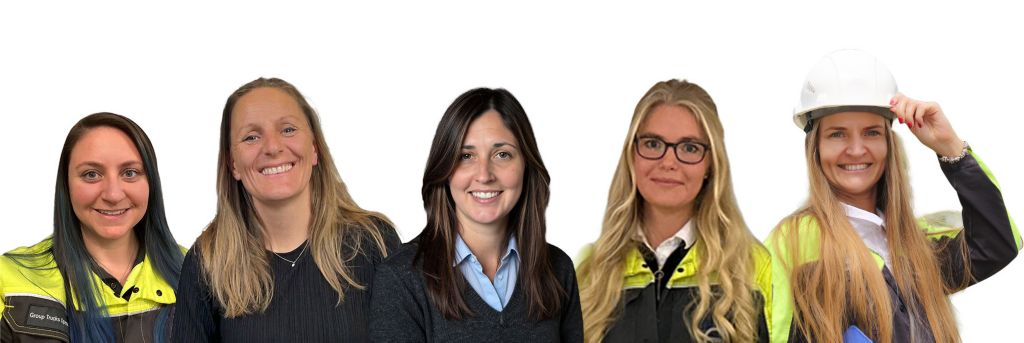
Majken Olsson
Elena Sokolova
Caroline Darby
Breanna Jordan

Real experiences matter most

Some employees at Volvo Group shared the things that make them feel most confident at work, in the hope that you might benefit from them.

For Renata Jabs, a Manufacturing Coordinator, preparation is everything: “Knowing that I am prepared for the role I am performing and that I am not here by chance.”

Vinutha Nagaraj, a Senior Engineer, is of the same opinion: My confidence comes from competence built through preparation and action. I invest time in understanding systems end-to-end and aligning stakeholders early. My secret sauce is structured execution with inclusive collaboration, when I know I’ve done the groundwork, I trust my voice.”

For Caroline Loyer, Head of Battery Re-Manufacturing at Volvo Energy, it is all about engagement and positive feedback from colleagues, while for Elena Sokolova, a Material Control Manager, her confidence is built on continually learning new things and adding to her expertise.

Aime Vesmes, a Senior Finance Project Manager, believes that having a positive attitude and happy disposition creates good energy when she interacts with others, helping to dispel any lack of confidence. Her advice? “Smile a little bit more often.”

By employing these tools you can remain on top of your game. Remember – only you can change your perception of the world and how you are perceived in it, but there are some shortcuts. Let’s explore them…

Tips & tricks

This is your quick guide to building confidence that not only feels real, but can also propel your career forward.

Based on our learnings, before you even start to think about how to overcome your lack of self-confidence you need to remember these words:

  • Youth is not a disadvantage – quite the opposite: it is your strength; it is when you can learn quickly and make the biggest moves in your career.
  • Your opinion counts. Share it when you get the opportunity.
  • Nobody is an expert. We are all learning, all the time.
  • Get a mentor or sponsor. You’ll thank yourself later.
  • Diversity is a strength. Progress comes from different perspectives – not repeating mistakes.
  • Perfection doesn’t exist. We are all human. Do, learn, grow. Make mistakes, gather the data, and improve as you progress.
  • Be yourself. Have fun. Rinse and repeat.


The blueprint

  1. Internal mastery: Silence the inner critic through evidence-based confidence, authoritative language, and cognitive reframing.
  2. Visibility: Work out loud, build a strong digital presence, and leverage hybrid work to your advantage.
  3. Strategic positioning: Shift from execution to influence by mastering sponsorship, speaking the language of leadership, and aligning your work with strategic priorities.

Together, these elements create a career narrative that is both authentic and powerful – one that fuels not just confidence, but opportunity. 

The confidence roadmap for 2026 and beyond

Confidence is not a personality trait. It is a skill – developed with deliberate practice, strategic visibility, and consistent reinforcement. Explore the tabs below to find out how you can build real and lasting confidence at work.

Building confidence from the inside out

The foundation of lasting professional confidence is internal mastery – the quiet but powerful belief that your voice, expertise, and presence hold weight. This kind of confidence isn’t innate; it’s cultivated through deliberate habits that strengthen your sense of capability and authority.

Rewriting the internal narrative

Many women are taught – implicitly or explicitly – to underestimate their abilities and take a backseat. This fuels imposter syndrome, especially in high visibility roles or areas involving new technologies. But imposter syndrome is not a sign of inadequacy; it is often a direct response to biased systems, underrepresentation, and a lack of visible role models.

To shift from self-criticism to self-trust, adopt the “scientist mindset.” Instead of fearing mistakes, treat each challenge as an experiment and learning experience. Replace “What if I’m wrong?” with “What can I learn from this attempt?” This re-frames risk-taking as data collection rather than personal failure.

The "Wins Folder" strategy

Confidence thrives when you consistently remind yourself of your track record. Create a digital Wins Folder and fill it with:

  • Positive emails or messages,
  • Screenshots of successful projects,
  • Metrics demonstrating your impact,
  • Compliments or shout‑outs from colleagues.

Review it every Monday morning or before a high-stakes meeting. Neuroscience shows that regularly revisiting positive evidence rewires your brain to expect success rather than doubt.

Mastering the language of authority

Internal mastery is reinforced through external communication. Certain habitual phrases – known as “diminishers” – undermine authority:

  • “I’m no expert, but…”
  • “Does that make sense?”
  • “I just think…”

Replace them with confident alternatives:

  • “I recommend…”
  • “Here’s what the data suggests…”
  • “The best course of action is…”

Pair strong language with the Power of the Pause. A two-second pause before speaking signals control, clarity, and executive presence.

Future-proofing through AI literacy

In 2026, confidence is inseparable from your comfort with technology. Women who embrace AI tools are seeing accelerated visibility and influence. You don’t need to become a data scientist – you simply need to understand how to leverage AI thoughtfully and articulate its business impact. Learn the tools and learn to explain them. Being the person who can translate AI complexity into practical value positions you as a domain leader.

Being seen in a hybrid, AI-driven workplace

In the modern workplace, visibility is a currency. With hybrid and remote roles now the norm, the old methods of being noticed – coffee machine chats, office visits – have lost their power. Women, who statistically choose hybrid work more frequently, must develop new visibility strategies that don’t depend on proximity.

Work out loud: the “Digital Breadcrumb” method

If your contributions are invisible, they may as well not exist. In 2026, successful women narrate their work – not in a self-promotional way, but to help teams, leaders, and cross-functional partners understand progress and lessons learned.

Try:

  • Weekly highlights shared in Teams
  • “Lessons learned” posts after projects wrap

Done consistently, these breadcrumbs form a narrative of influence and leadership.

Showing up early and with intention

In virtual meetings:

  • Speak within the first 10 minutes. Early contributors are perceived as more engaged and more influential.
  • Turn your camera on when possible. Good lighting, clear audio, and intentional framing create immediate presence. This isn’t vanity – it’s professionalism.

Prepare one high-impact question or insight for key meetings. This ensures your voice contributes to the room’s direction rather than reacting to it.

Harnessing the AI innovation wave

AI projects attract significant leadership attention. To boost visibility:

  • Volunteer to pilot new tools.
  • Lead a small AI testing group.
  • Present findings that tie technology to efficiency or ROI.

Even simple experiments – like automating a reporting process – can position you as an innovator.

Networking vertically and across silos

Visibility doesn’t come from knowing everyone – it comes from the right people knowing you.

Try these:

  • Micro-mentoring coffee chats (15 minutes) with leaders in other departments.
  • Join internal working groups or cross-functional committees.
  • Post one thought leadership insight per week on LinkedIn to strengthen your internal and external brand simultaneously.

These actions help create a digital and relational footprint that keeps your name in influential conversations.

Moving from “High Performer” to “High Potential”

High performers execute well. High-potential talent shapes direction. Many women are still stuck in the “competency trap” – so good at their current job that they become indispensable and overlooked for advancement.

Strategic positioning changes that.

The power of sponsorship

A mentor gives advice.
A sponsor gives opportunity.

Sponsors:

  • Advocate for you when you are not in the room,
  • Attach their reputation to your advancement,
  • Open doors you cannot open yourself.

Don’t ask someone to be a sponsor. Instead, identify a leader two levels above you and deliver a win on something that matters deeply to them. Solve a headache, accelerate a project, or improve a process they champion. Impact earned becomes sponsorship granted.

Speaking the language of leadership

To be seen as a strategic thinker, focus less on tasks and more on outcomes. Frame contributions in terms of:

  • ROI
  • Efficiency
  • Scalability
  • Risk reduction
  • Alignment with companywide objectives

For example: Instead of “I managed the redesign project,” say:
“I led an AI-powered workflow redesign that reduced turnaround time by 22% and saved the team 15 hours per week.”

This elevates your role from executor to strategist.

Creating space for growth

Professional growth requires capacity. If you spend 100% of your time on delivery, you’ll never have room to take on the projects that increase visibility.

Follow the 80/20 rule:

  • 80% of your time on core responsibilities
  • 20% on “visibility projects,” such as innovation committees, task forces, or internal speaking roles

If you lead a team, practice delegation as development – delegate not just tasks, but opportunities that stretch people. Leaders who develop leaders rise faster.

Strengthen your confidence daily

Here are simple but powerful habits you can adopt immediately:

  • Create a “Wins Folder” and review it weekly.
  • Audit your language and eliminate diminishers.
  • Use the 5‑minute power prep before meetings: list your three biggest value adds.
  • Speak early in meetings to shape the conversation.
  • Schedule monthly vertical networking chats.
  • Celebrate others publicly – it signals security and leadership.
  • Define your value proposition: What business problem do you solve uniquely?
  • Cultivate AI literacy to future‑proof your career.

The uncomfortable fact box

  • According to BSI's Lifting the Second Glass Ceiling (2025), 20% of women expect to leave the workforce early – not voluntarily. Among those experiencing menopause or perimenopause, the figure rises to 29%.
  • Expectations for workplace equity are slipping; only 42% believe they will reach pay parity, 43% believe their generation will receive necessary flexibility, and just 46% believe women will reach equal leadership representation.
  • Support gaps in the workplace widen the divide even further. The Women in the Workplace 2025 report highlights that only 31% of entry-level women have a sponsor (vs. 45% of men), and just 21% are encouraged to use AI tools – compared to 33% of men – despite AI literacy now being essential to visibility and advancement.
  • Only 30% of entry-level women were promoted in the past two years (vs. 43% of men).
  • Senior women continue to experience the highest burnout.
Back to the #tecHER newsletter